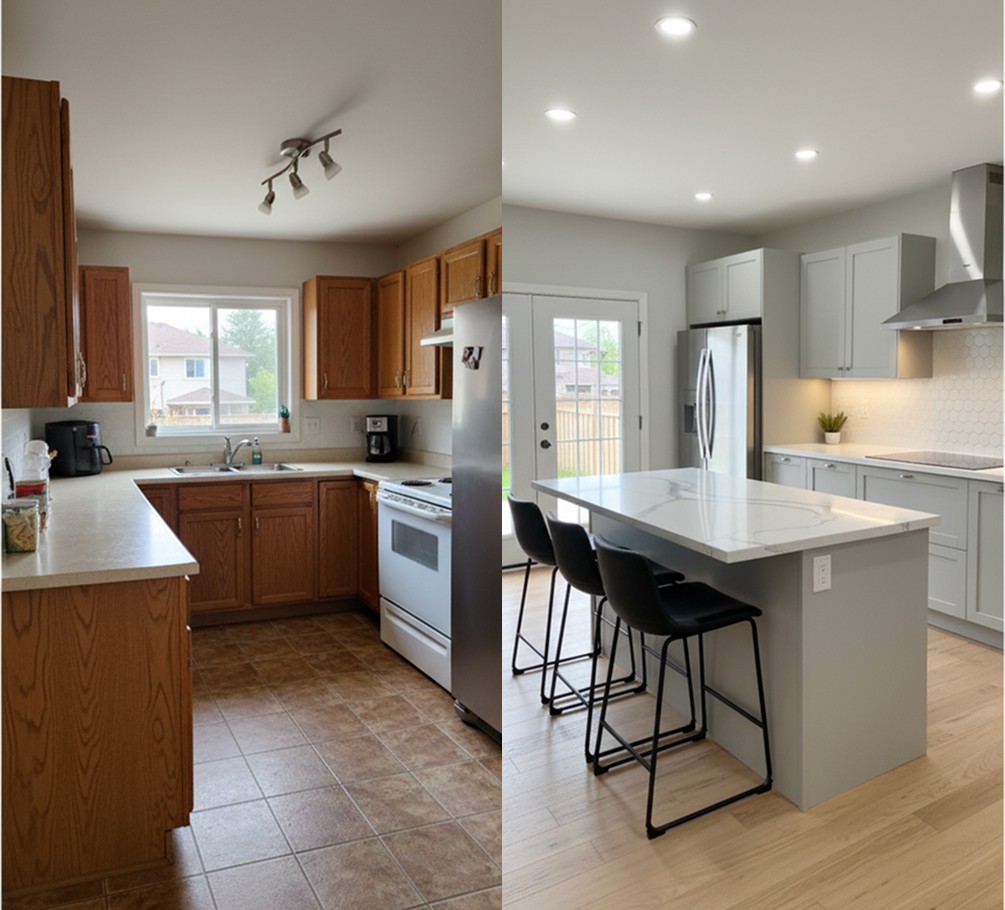
A new kitchen is one of the most impactful renovations you can do – and one of the easiest to regret if it’s rushed.
Whether you’re renovating a detached home in Oakville, a townhome in Burlington or a condo in downtown Toronto, making key decisions before demolition will save you time, money and stress.
Below is the kitchen renovation checklist we walk through with NADA clients.
21 decisions to make before demolition
How you actually cook and live – Be honest about your habits. Do you cook every night, host big gatherings, or mostly reheat and order in? The layout and storage plan should be designed around real life, not just inspiration photos.
Which walls, windows and doors can move – Decide what’s realistically on the table structurally. In condos and many GTA homes, plumbing stacks, venting and load-bearing walls may limit how far you can push the layout.
Island, peninsula or neither – An island isn’t always the right answer. Prioritise comfortable circulation (ideally 42–48 inches between runs of cabinets) and consider a peninsula or L-shape if the room is tighter.
Appliance layout and sizes – Confirm where the fridge, range or cooktop, wall ovens and dishwasher will live — and whether you’re upgrading to wider or integrated appliances. These dimensions drive the entire cabinet plan.
Future needs and resale – Think beyond the next two years. Will you age in place? Sell in five to ten years? That affects choices like clearances, storage heights and whether you design for a young family, downsizers or a broad resale market.
Pantry strategy – Decide between a walk-in pantry, a tall cabinet pantry, or a combination. Pantries are often the most efficient place to spend space in a GTA kitchen.
Drawers vs doors – Lower cabinets as deep drawers are usually more functional than doors with shelves. Decide where you truly need doors (e.g. under-sink, tray storage) and where drawers will make daily life easier.
Dedicated storage zones – Plan specific zones for baking, coffee, kids’ snacks, pet food, recyclables and small appliances. Label these on your plans so cabinetry and power are positioned accordingly.
Small appliance visibility – Choose whether mixers, toasters and espresso machines live on the counter, in an appliance garage or in a pantry. This impacts counter depth, plug locations and door clearances.
Tall storage and cleaning gear – Make a home for brooms, vacuums, mops and bulk items. In many Toronto and GTA homes, the kitchen is the only place this tall storage can realistically live.
Layers of lighting – Plan for general lighting (pots or ceiling fixtures), task lighting (under-cabinet) and accent lighting (pendants, in-cabinet). A beautiful kitchen can feel flat if the lighting plan isn’t layered.
Switching and dimming – Decide which lights run together and where the switches sit. Dimmers on at least one or two zones make a big difference for evening use and entertaining.
Outlets and charging – Think through outlet placement on backsplashes, islands and in pantry areas. Consider a dedicated spot for charging phones and tablets so cords aren’t scattered across the main counter.
Cabinet style and door profile – Choose between flat panel, shaker or a more detailed profile, keeping in mind how it aligns with the rest of your home’s architecture and how easy it will be to clean.
Countertop material and edge – Decide on quartz, natural stone or another material, and choose the edge profile (eased, pencil, mitred, etc.). Factor maintenance and staining tolerance into the decision, not just appearance.
Backsplash approach – Will you run tile to the underside of uppers, take slab up the wall, or mix both? Backsplash choices can dramatically change the feel of the room and impact budget.
Flooring and transitions – Determine whether the kitchen floor matches adjacent areas or changes material. Continuous flooring often makes smaller Toronto and GTA spaces feel larger and calmer.
Hardware look and feel – Decide on knobs, pulls or integrated handles. Test how they feel in your hand and consider how they’ll work with your appliance finishes.
Realistic investment range – Establish a budget range (comfortable vs stretch) before finalising design. A good kitchen renovation contractor in the GTA will help prioritise where to spend and where to save.
Living-through plan – If you’re staying in the home during the renovation, agree on where a temporary kitchen will be set up, how long you’ll be without a sink and stove, and what work hours are acceptable.
Target completion date – Work backwards from when you’d like the kitchen finished. In Toronto and the GTA, material lead times and trade availability can be significant, so build that into your expectations early.
A thoughtful kitchen renovation is about much more than cabinet colour. When you work through these decisions in order, the design, pricing and construction process becomes far smoother.
If you’re planning a kitchen renovation in Oakville, Burlington, Mississauga, Toronto or the GTA West and want a team to guide you step by step, we’d be happy to help.
Book a kitchen renovation consultation and we’ll start mapping out your project.
Related Reads for You
Discover more articles that align with your interests and keep exploring.