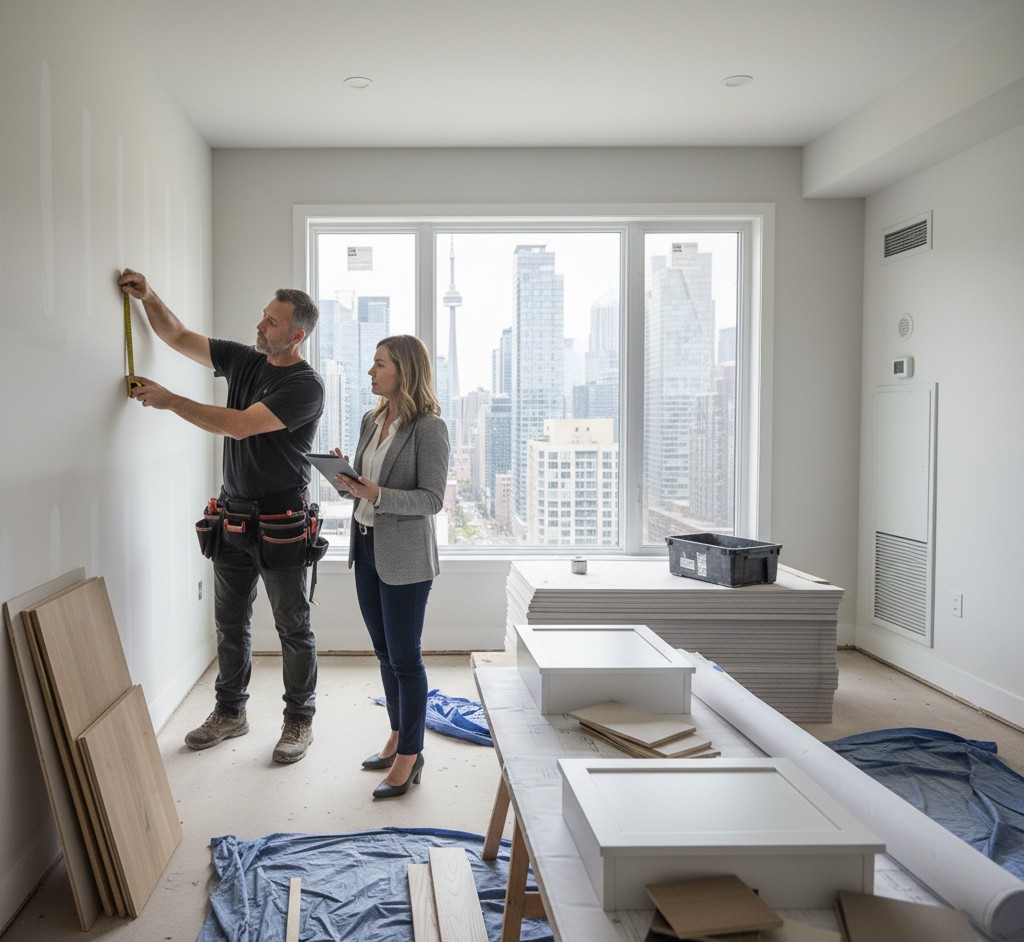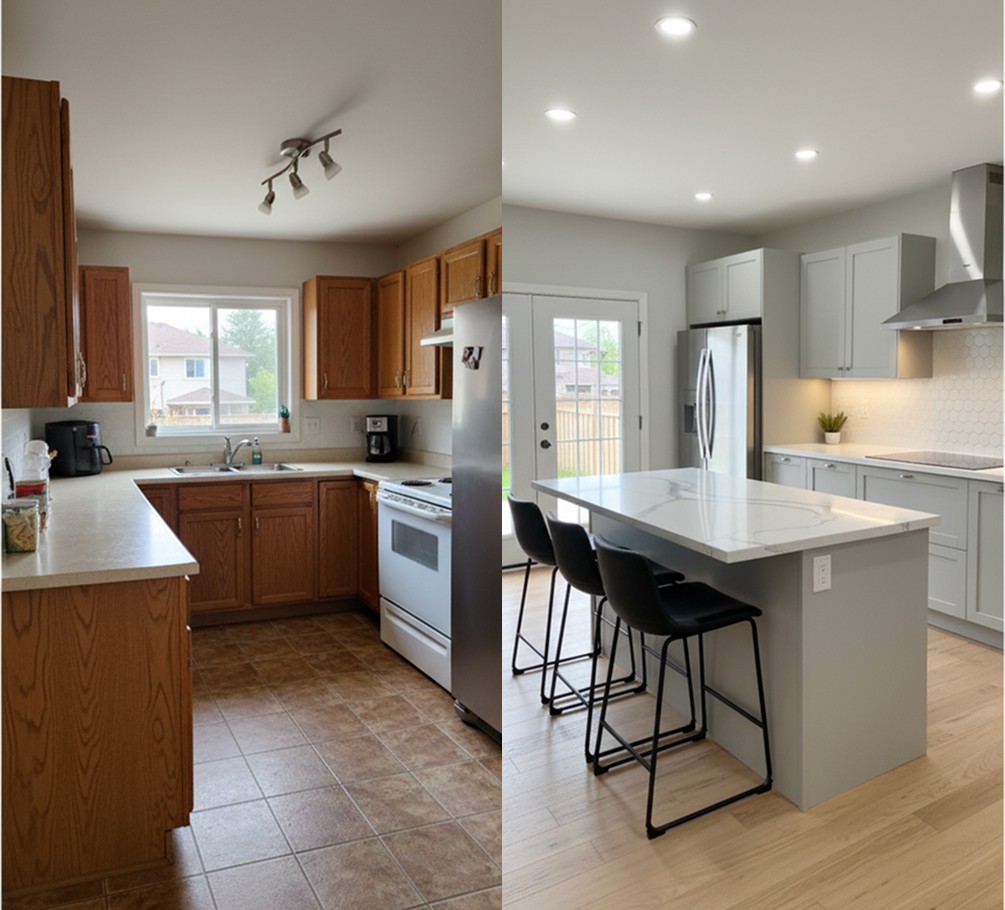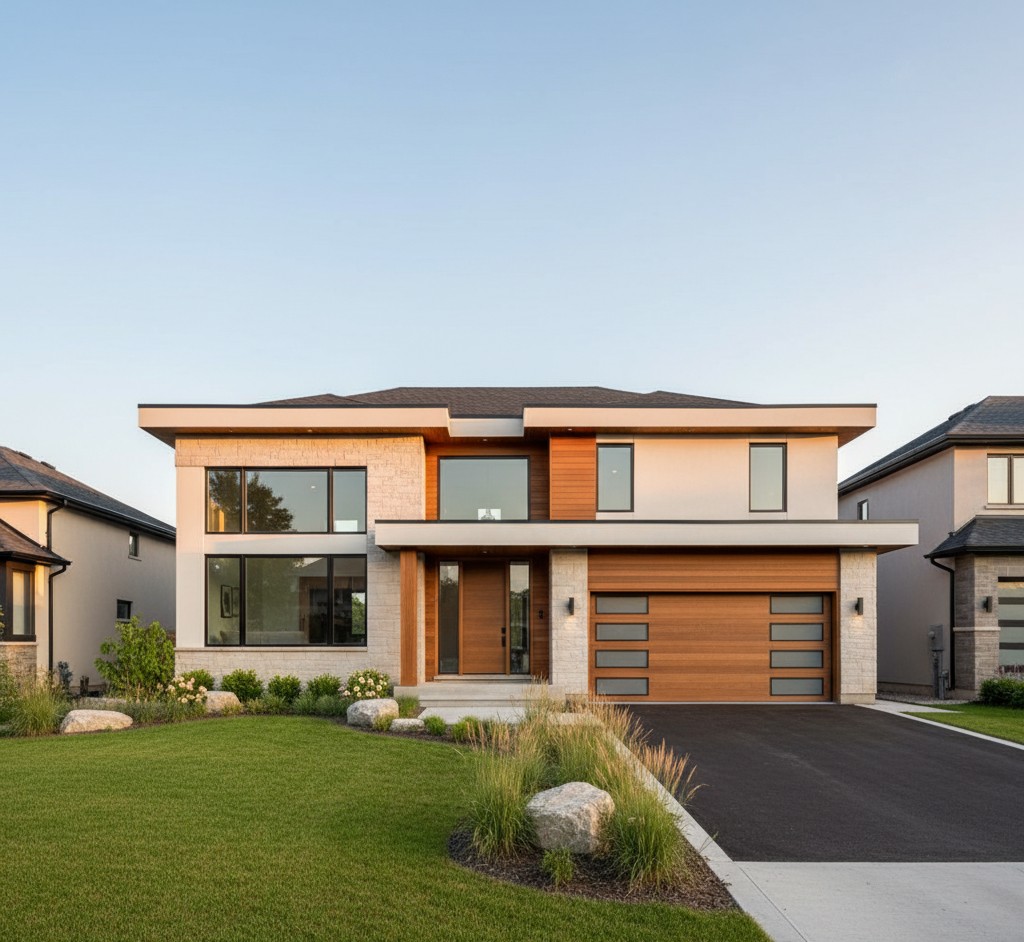
If you own a home in Toronto, Oakville, Burlington or Mississauga, chances are you’ve thought about a “full gut” at some point. Older layouts, tiny kitchens, low ceilings and dated finishes can make even a great location feel tired.
A full home renovation can fix all of that – but only if it’s planned properly.
This guide walks you through how we recommend GTA homeowners approach a whole-home renovation, based on projects we run at NADA Design & Build every day.
1. Decide what “full home renovation” actually means for you
“Full home renovation” can mean anything from new finishes on every floor to moving walls and reworking structure.
Before you ask for quotes, define:
Spaces involved: main floor only, or basement and second floor as well?
Level of change: cosmetic (paint, flooring, fixtures), layout changes, or structural work?
Non-negotiables: e.g. “island with seating for 4”, “bigger shower”, “dedicated home office”.
Nice-to-haves: items that can be removed if costs climb.
Being specific here helps contractors price like-for-like scopes instead of guessing.
2. Set a budget range, not a single number
In the GTA, labour, permits and materials can fluctuate quickly. Instead of saying “we have $200K”, think in ranges:
A base range you’re comfortable with
A stretch range if certain upgrades are worth it
A hard ceiling you will not cross
Share this with your design–build team. A good firm will guide you on what’s realistic and where to scale back before you fall in love with drawings you can’t afford to build.
3. Choose design–build over piecing together a team
Many homeowners try to hire an architect, then a designer, then a contractor. On paper it seems cheaper. In reality, it often leads to:
Drawings that don’t reflect real construction costs
Gaps in responsibility when issues appear
More change orders and delays
With a design–build renovation company in Toronto or the GTA, design, pricing and construction live under one roof. That means:
Budgets are tested as drawings evolve
One team is accountable from concept to completion
Less time is wasted re-explaining your vision
This is exactly how we’ve structured NADA, because we’ve seen too many projects suffer from fragmented teams.
4. Plan around permits and condo rules
In detached homes, you may need:
Building permits for structural changes, additions or basement suites
Engineering for major openings or load-bearing walls
Surveys or zoning checks for additions
In condo renovations, you’ll also deal with:
Work hours and elevator bookings
Restrictions on wet areas and flooring
Insurance and contractor approval
A solid renovation partner will review your property, advise what’s required, and build permit/board timelines into the schedule from day one.
5. Phase the project intelligently
Not every GTA family can move out for months. Ask your contractor about:
Phased work (e.g. basement first, then main floor)
Temporary kitchens or laundry if you’re living through it
Ideal seasons for exterior and addition work
An experienced team will suggest sequencing that minimises disruption and avoids costly rework.
6. Protect your budget with clear documentation
The biggest budget killers we see aren’t “bad contractors” – they’re vague scopes.
Insist on:
Line-item estimates with allowances clearly labelled
Drawings for layouts, lighting and millwork – not just verbal descriptions
A written process for pricing any changes
When we run full home renovations in Oakville, Burlington and Toronto, no demolition starts until drawings, specs and a signed estimate are in place. That discipline is what keeps change orders under control.
7. Ask how communication actually works
During a major renovation you’ll have questions. Before you sign:
Find out who your day-to-day contact is
Ask how often you’ll receive updates and site photos
Clarify how decisions and approvals are documented
You want a partner who treats the project like a professional job, not a casual side gig.
8. Think beyond the reveal photos
Beautiful photos are great, but you’re going to live in the space for years. Look for a contractor who talks about:
Durability of materials and finishes
Warranty and aftercare
How the design will age over time
At NADA, our goal is simple: a full home renovation that still feels smart and solid five, ten, fifteen years from now – not just on day one.
Ready to talk about your renovation?
If you’re planning a full home renovation in Toronto, Oakville, Burlington, Mississauga or the GTA West, we’d be happy to review your ideas and walk you through a realistic process and budget range.
Schedule a consultation with the NADA team and we’ll help you take the next step with clarity.
Related Reads for You
Discover more articles that align with your interests and keep exploring.